The Malpolon Genus
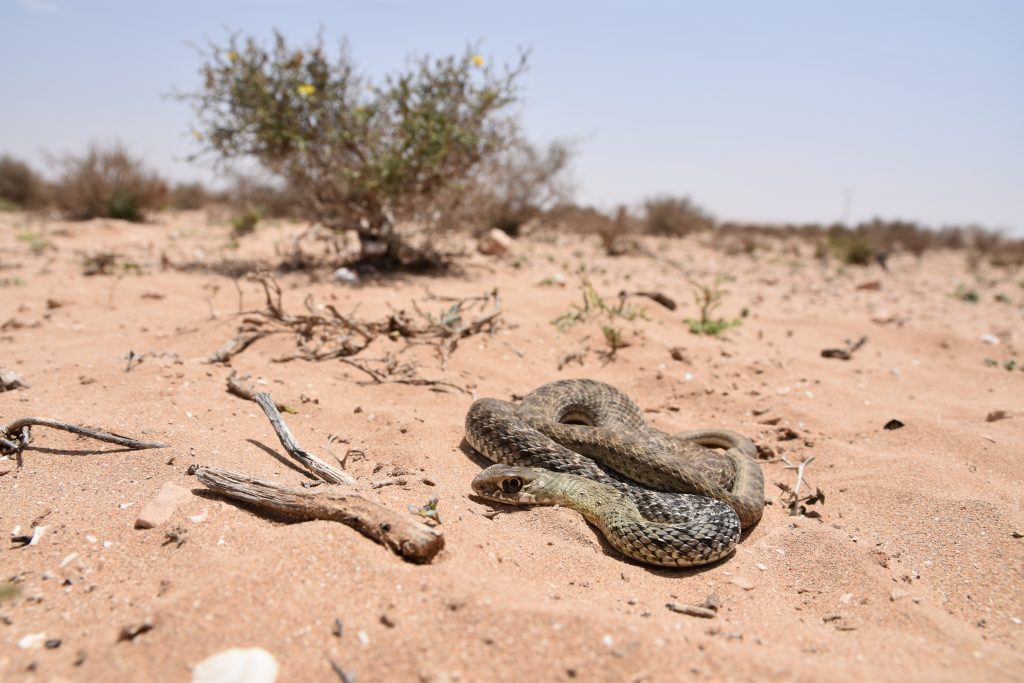
Malpolon is a small genus of snakes within the Psammophiidae (African Sand Snakes) family, commonly known as Montpellier snakes. The genus consists of only three species: Malpolon Monspessulanus – the Western Montpellier Snake, Malpolon Insignitus – the Eastern Montpellier Snake, and Malpolon Moilensis – the False Cobra. They differ in their size, appearance and distribution, but share many traits such as great speed, an active hunting style, a reputation for being fierce and defensive when disturbed, and their venom.
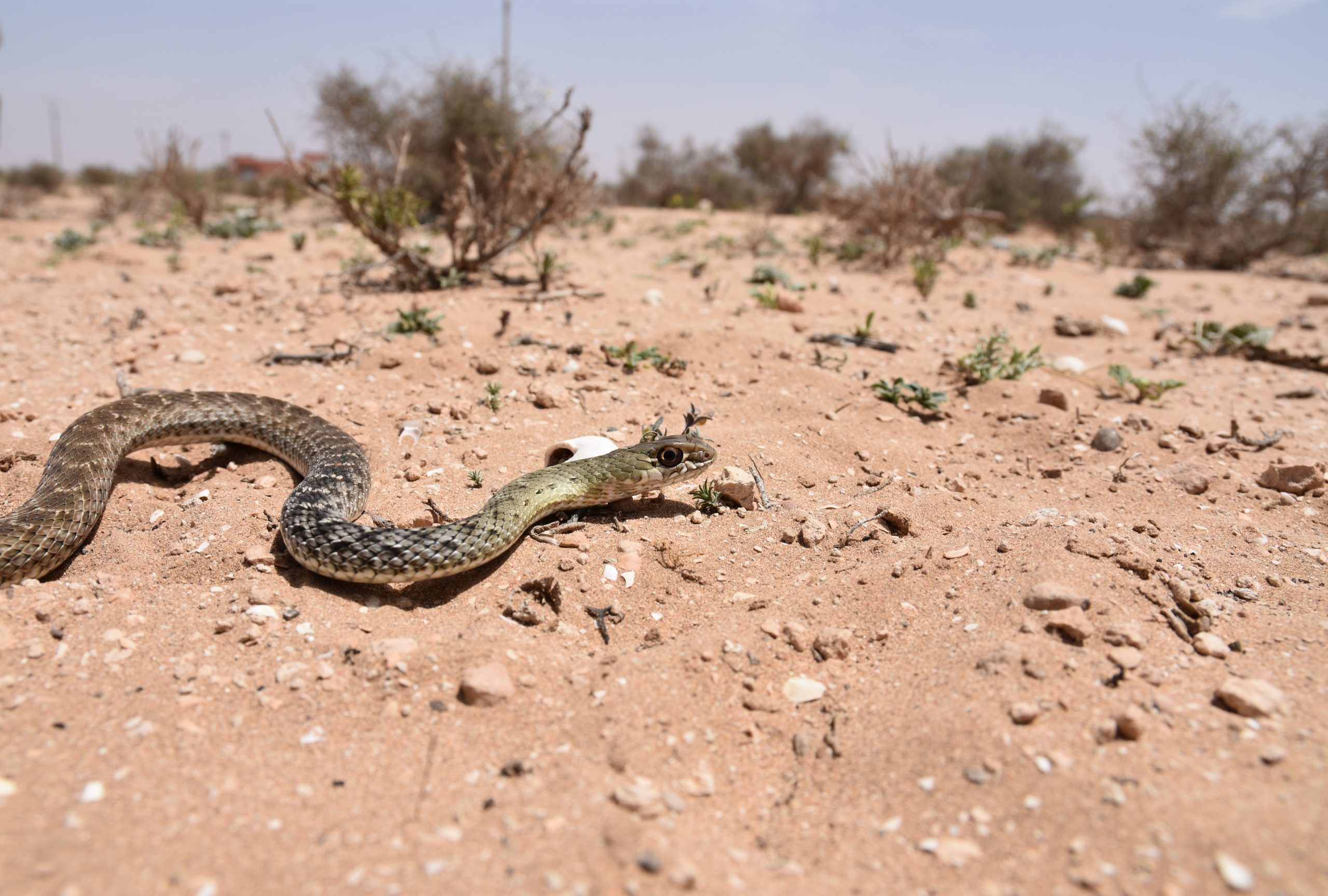
The Western Monpellier Snake, Malpolon Monspessulanus, shown above, is likely the most well-known Malpolon species. This species is also likely the largest species, with adults reaching 2 metres not uncommonly and occasionally 2.5 metres with large individuals. It is found across western Europe (France, Spain and Portugal) as well as north Africa (Morocco and Algeria). Its appearance differs from other Montpellier snakes with its unique variety of colours, usually being olive-brown with a greenish head and a grey-blue ‘saddle’ on its lower neck. The juveniles though are typically brown with irregular blotches of white and greys. It is easily recognisable with its pointed snout and large eyes which give it an aggressive and predatory look.
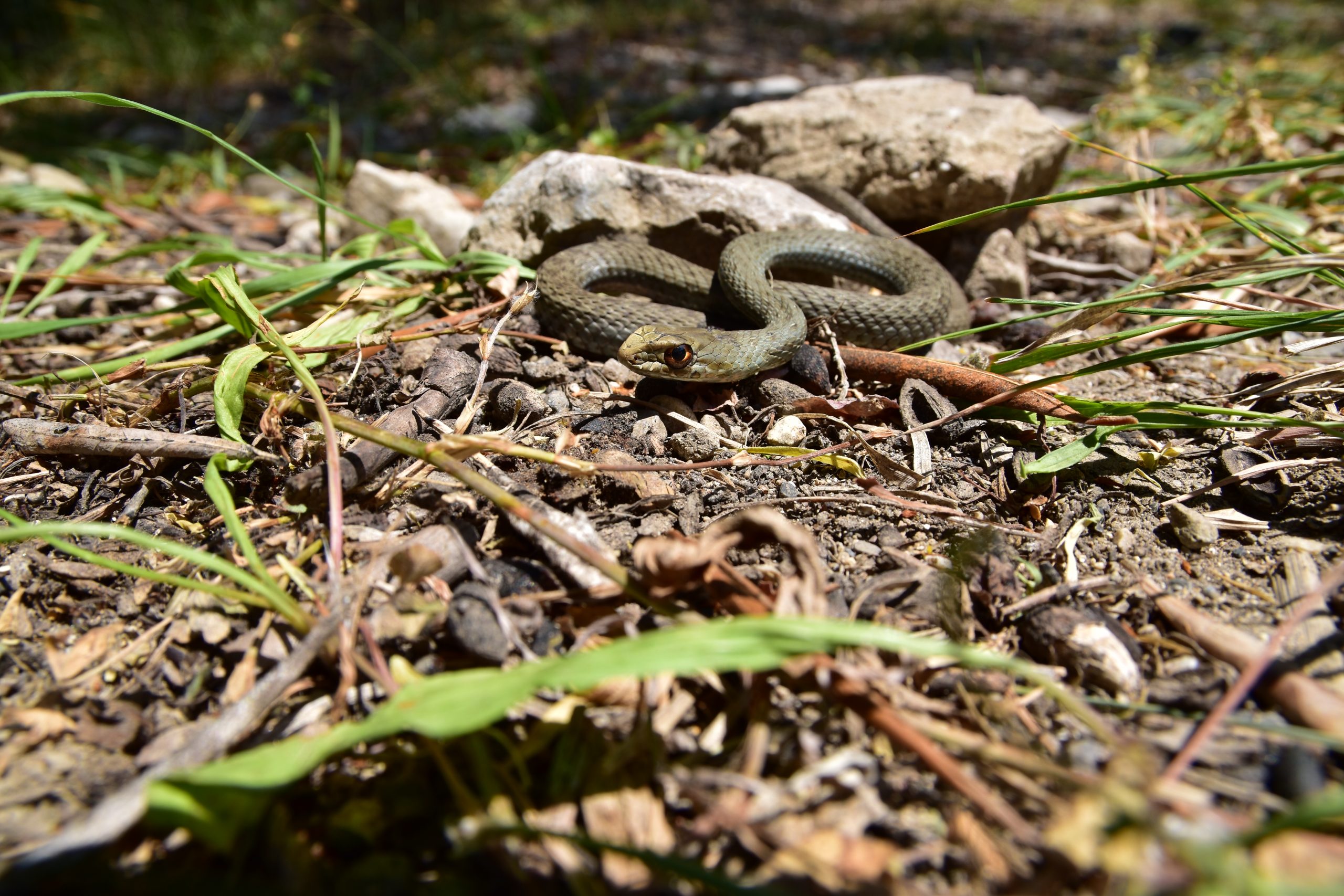
The Eastern Montpellier Snake, Malpolon Insignitus, image shown above, is similar to the Western Montpellier Snake, once being classified as a subspecies of M. Monspessulanus. It generally grows to the same size, though possibly slightly shorter on average, but still capable of reaching lengths over 2 metres. M. Insignitus varies from M. Monspessulanus in that it is often more uniform in colour, typically being olive coloured or dark green down the whole body. However, like the juveniles with M. Monspessulanus, they are usually more brown. Its distribution is far greater than M. Monspessulanus, being found in most of the Balkan Peninsula, western Turkey, The northern parts of the Middle East, areas surrounding the Caspian Sea, and North Africa.
The third Malpolon species is the False Cobra, Malpolon Moilensis, also known as the Moila snake and Hooded Malpolon. This species differs significantly from the other two Malpolon species, being much smaller, rarely exceeding 1.5 metres, and being lighter in colour, usually sandy brown darker blotches. Additionally, it can flatten its neck to make itself look larger, and mimicking a true cobra in the process, hence the name, ‘False Cobra’. M. Moilensis has by far the widest distribution, stretching across the Sahara desert in North Africa, the Arabian peninsula and other parts of the Middle East such as southern Iran.
Venom of Malpolon Snakes
Each of the three species of the Malpolon genus are venomous opisthologlyphous (having posterior grooved fangs with Duvernoy’s glands). Their venom is mainly neurotoxic used to quickly immobilise its prey, usually being lizards, rodents, birds, or other snakes. Unlike vipers or elapids, its venom delivery system is not as efficient, largely because of the position of their fangs at the back of their mouths. This means they must chew on their victims for a bit before envenomation occurs. Despite these species being venomous, they generally aren’t considered a threat to humans, envenomation is unlikely (due to the position of their fangs), even with multiple bites. If envenomation does occur, the symptoms will likely be mild (the venom isn’t considered dangerous to humans) and usually limited to swelling and local pain. All three Malpolon species have similar venom without any noticeable differences. However, the larger snakes are usually the ones capable of producing the most venom, meaning the larger species are potentially slightly more venomous, though this doesn’t make a difference in the danger of their venoms when it comes to envenomation in humans.
Behavior of Malpolon Snakes
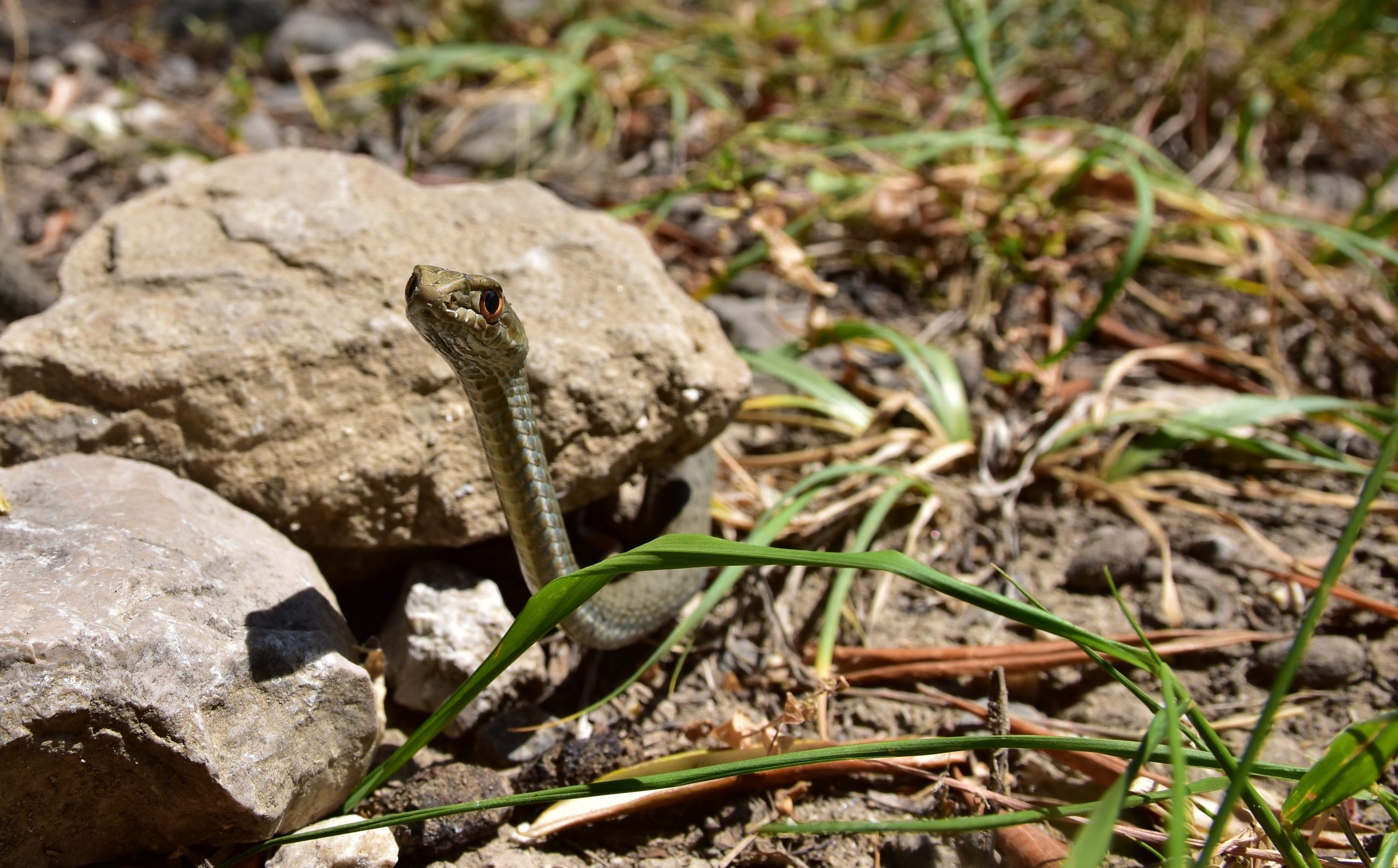
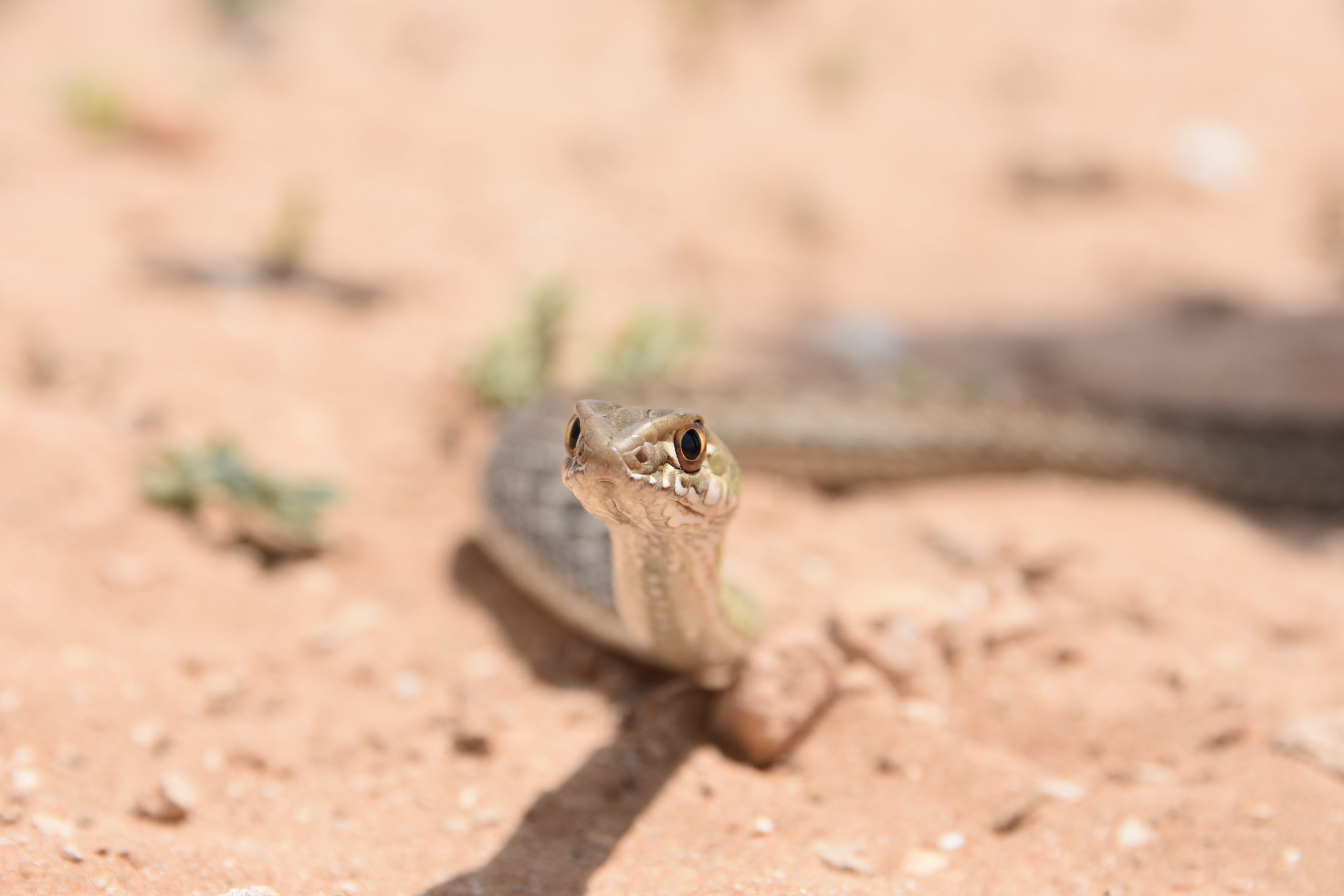
Malpolon snakes are energetic and visually oriented predators, meaning they have an active life style. Being so bold and also diurnal results in them frequently being observed, either alive (and often quickly slithering away) or run-over on roads. If cornered or caught, which is difficult to do due to their agile and speedy nature, they quickly adopt a dramatic defensive position, striking, hissing, hooding (in the case of M. Moilensis) and often lifting their heads in what is known as ‘periscoping’, as seen below (in both M. Monspessulanus and M. Insignitus). This is classic in the malpolon genus, and they do it often even when undisturbed when hunting or scanning their area.
Total Distribution and Habitat
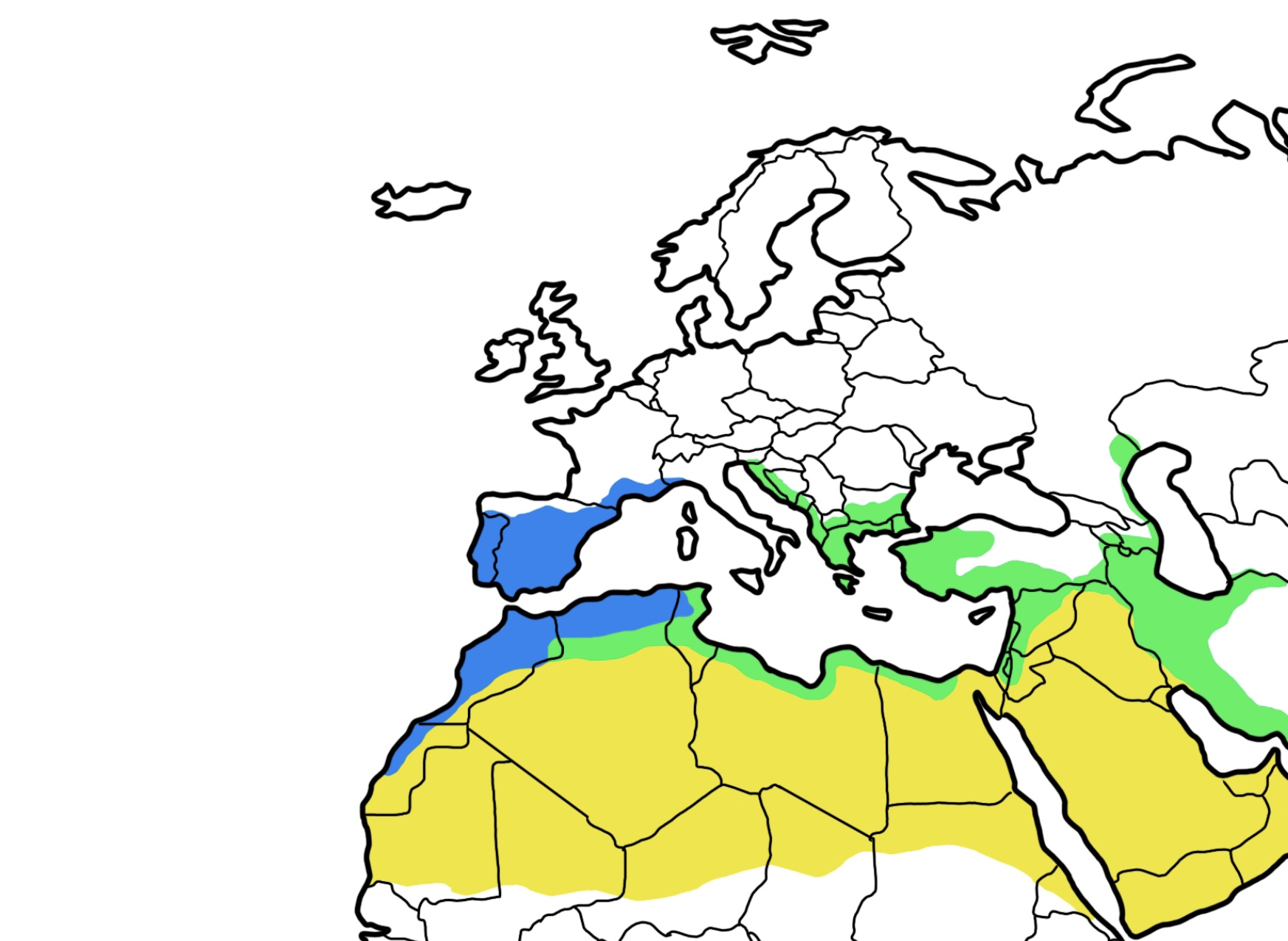
Above: Distribution Map of all Malpolon species (Blue – M. Monspessulanus, Green – M. Insignitus, Yellow – M. Moilensis)
Malpolons, being a generalist genus, inhabit a range of habitats, M. Monspessulanus is typically in: Mediterranean scrubs, rocky hillsides, farmlands, forest sides or sparsely vegetated dunes. M. Insignitus inhabits similar areas to M. Monspesselanus such as: Dry shrublands, Rocky outcrops, open steppe-like fields and dune habitats. M. Moilensis on the other hand is found in much more arid habitats like: Dry sandy or rocky deserts, dunes with sparse vegetation, or savannah-like open, arid environments.